
Most people hire an architect once. Unlike choosing a decorator or a contractor, there's no trial run — no way to calibrate your expectations before committing to a project that will take months and cost tens of thousands of pounds. And yet most homeowners approach the decision with less research than they'd give to buying a new car.
This guide is for people who want to get it right the first time. Whether you're planning a modest extension, a full house renovation, or building from scratch, understanding what separates a good architect from a genuinely skilled one will shape everything: your planning outcome, the quality of the finished space, and what your home is worth — and how much you enjoy living in it.
TL;DR Architect fees in the UK typically run 7–15% of build cost. Architect-led planning applications succeed at 93–99%, compared to a national average of 86% (GOV.UK, MHCLG, 2025). In Salisbury, with its conservation areas and complex planning environment, local expertise is as important as professional credentials.
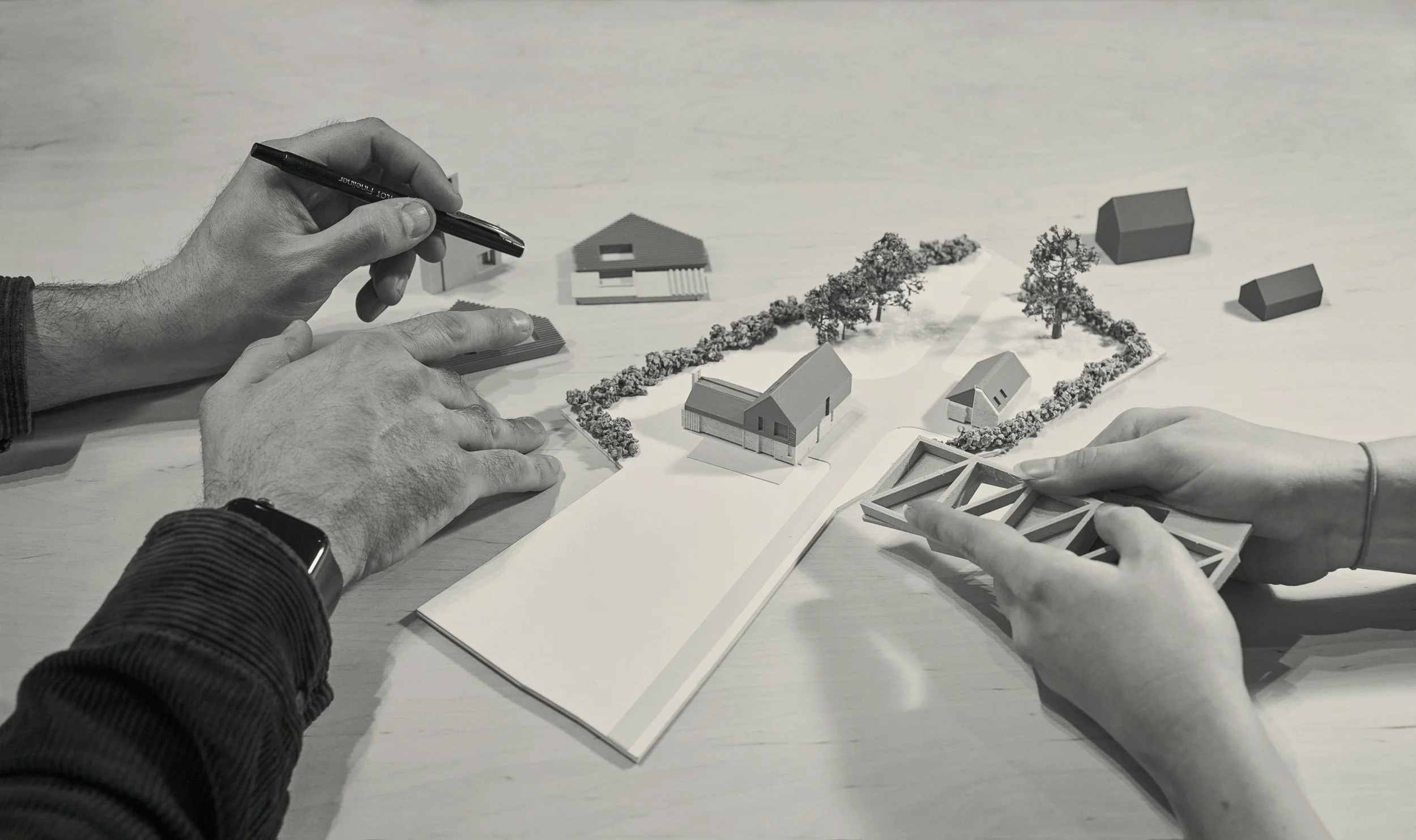
Do You Actually Need an Architect, or Will a Designer Do?
Twenty-five percent of UK homeowners who renovated in 2024 hired an architect — up five percentage points from the year before (UK Houzz & Home Renovation Trends Study, 2025). But many more hired someone with a similar-sounding title who operates without any regulated professional standing at all. That distinction matters more than most homeowners realise.
In the UK, the title "architect" is legally protected. Only someone registered with the Architects Registration Board (ARB) can use it. ARB registration means a minimum seven years of combined training and practical experience, professional ethics obligations, and indemnity insurance that protects you if something goes wrong.
Beyond that baseline, look for RIBA Chartered status. The Royal Institute of British Architects sets standards above the legal minimum: peer review, continuous professional development, and a formal complaints procedure. A RIBA Chartered Practice has committed to those standards at an organisational level — not just individually.
The alternative — architectural designers, draughtspersons, planning consultants — may be fine for simple, low-stakes work. They're often cheaper. But they're not regulated in the same way, their training may be partial, and your recourse if something goes wrong is considerably more limited.
What RIBA Chartered Status Actually Means for You
When a practice holds RIBA Chartered status, every project is led by someone who has completed the full Part 1, Part 2, and Part 3 qualification pathway. More importantly for homeowners: it means you're entitled to work with a qualified architect throughout the project, not a junior technician who escalates to a senior only when something goes wrong.
This is more significant than it sounds. Some larger firms use the RIBA brand to win work, then delegate day-to-day client contact to unqualified staff. A smaller RIBA Chartered Practice often means the person you meet at first consultation is the person designing your home — every week, for the life of the project.
What Should You Expect to Pay a Salisbury Architect?
Architect fees in the UK typically range from 7% to 15% of total build cost for a full service. On a standard 30m² single-storey extension — which typically costs between £66,000 and £99,000 to build (Checkatrade, 2025) — that puts architect fees in the range of roughly £7,000 to £12,000.
That percentage shifts depending on project complexity, the scope of service, and how far through the process you need the architect involved. Hourly rates for UK architects run £75–£200 per hour (HOA, 2025), and are most common for consultations or partial-service engagements before a full brief is agreed.
How Architect Fees Are Structured
Percentage of construction cost is the most common arrangement for full-service projects. The fee rises and falls with the build cost, which aligns incentives reasonably well. Expect 7–10% for straightforward residential work, 10–15% for more complex or design-intensive projects.
Fixed fee is often preferred for clearly scoped work — a planning-only service, feasibility study, or concept design stage. It gives you cost certainty. The risk is that it can create an incentive to limit time spent once the agreed scope is met.
Hourly rate billing is common for early-stage consultations and partial services. Useful for testing the relationship before committing to a full appointment.
One thing most fee guides don't mention: the question isn't only what the architect costs, but what their involvement prevents you from spending elsewhere. A well-drawn set of construction documents reduces ambiguity on site. Ambiguity on site means variations — and contractors price uncertainty into their quotes. An architect who produces clear, thorough documentation can recover their fee multiple times over in reduced contractor contingencies and avoided extras. The fee isn't just a cost. It's a risk management tool.
A reputable practice will discuss fees openly at first meeting and explain what each stage of service includes and excludes. Vagueness about fee structure tends to foreshadow vagueness about everything else.
What Does Good Architectural Design Actually Add to Your Home?
According to a Nationwide Building Society report from October 2025, a well-executed loft conversion incorporating a double bedroom and bathroom can add up to 24% to the value of a three-bedroom home. An additional bedroom alone adds approximately 13%. An extra bathroom adds around 4%.
These figures capture physical space added. They don't capture something harder to quantify but equally real: the difference between a space that functions adequately and one that you actually want to live in.
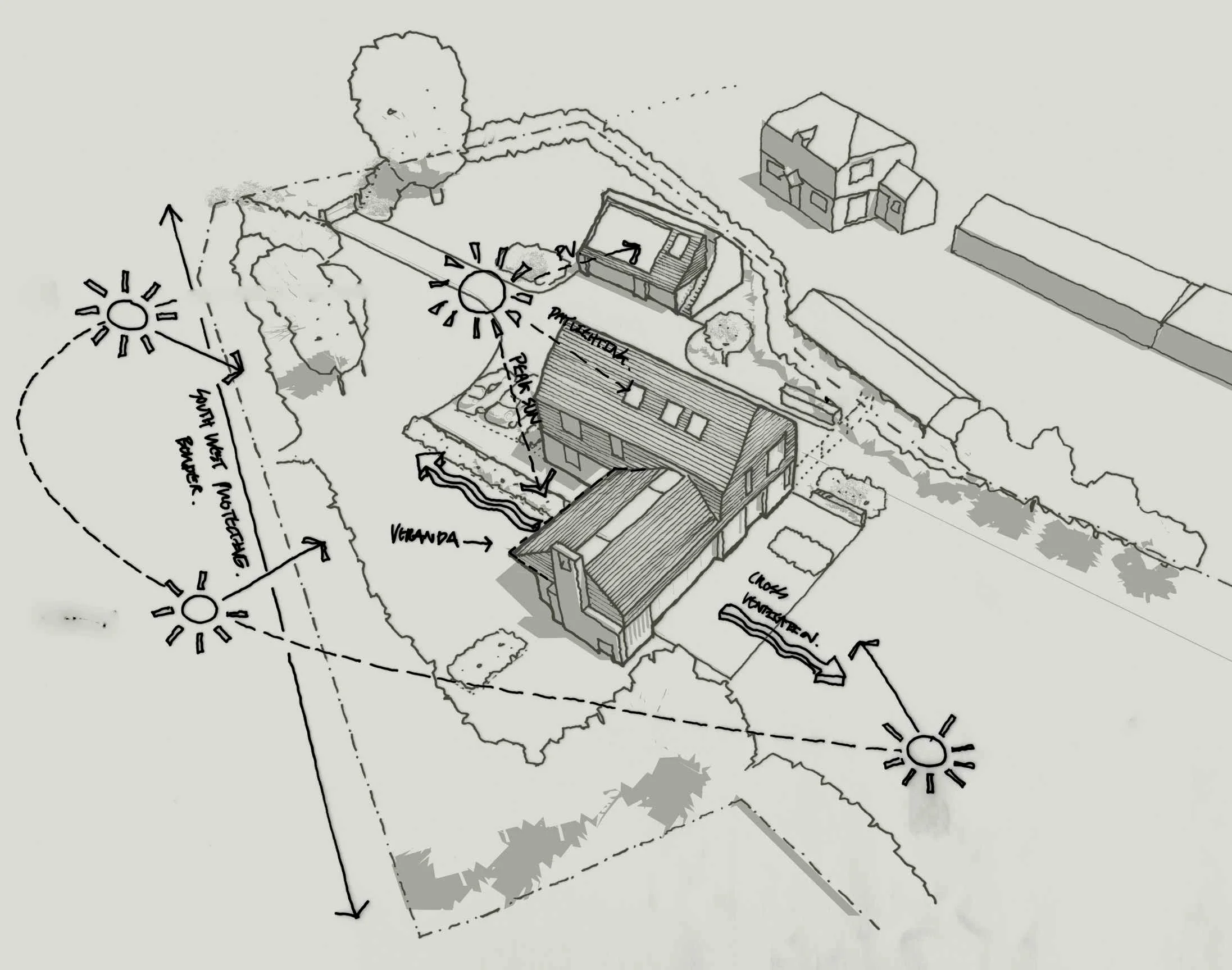
A competent architect makes sure an extension meets building regulations, achieves planning consent, and delivers the brief on budget. A genuinely skilled architect does all of that — and also considers where the light falls in January, how new rooms connect to the garden, whether the window proportions relate meaningfully to the existing house, and what the space feels like on a dark winter evening. These aren't abstract aesthetic concerns. They're the difference between an extension the family uses naturally and one that always feels added-on.
The distinction becomes clearest when you look at projects where the brief was essentially identical — same budget, same house type, similar clients — but the outcomes diverge sharply. One reads as a house that was extended. The other reads as a house that was designed. The difference is almost always traceable back to whether the architect treated it as a design problem worth solving properly, or as a compliance exercise to be processed.
Award recognition is one proxy for design quality that homeowners can actually evaluate. RIBA awards aren't marketing prizes — they're assessed by practising architects and academics against criteria that include quality of design response, relationship to site, material honesty, and client outcomes. Winning one is meaningful. It means peers judged the work to be genuinely better than the alternatives.
How Does an Architect Improve Your Chances of Getting Planning Permission?
Planning permission in England was granted for 86% of all applications in Q4 2024, according to official MHCLG statistics published by the government in March 2025. Architect-led applications, by contrast, report approval rates of 93–99% (Resi, 2024). The gap isn't coincidental.
An experienced architect understands how to position an application before it's submitted — which precedents to reference, how to frame a design in terms that align with local planning policy, and where the likely objections will come from. This matters everywhere in England. It matters considerably more in Salisbury.
Salisbury's Planning Context
Salisbury has an unusually complex planning environment. The city's historic core, extensive conservation areas, and significant proportion of listed residential buildings mean the local planning authority applies national policy through a particular lens — shaped by the Cathedral Close, the medieval street pattern, and a Wiltshire vernacular that runs through even relatively modern suburban development.
An architect without specific local knowledge can produce a technically sound application that still fails because it misreads what the authority will accept in a specific street or setting. Conservation area proposals carry different requirements and expectations from standard householder applications. Listed building consent is a separate consent type entirely, with its own assessment criteria.
According to MHCLG official statistics published in March 2025, England's overall planning approval rate for Q4 2024 was 86%. Architect-led firms report rates of 93–99% across their portfolios, suggesting professional input meaningfully improves planning outcomes. For homeowners in conservation-sensitive cities like Salisbury, where applications face heightened scrutiny of design quality and heritage impact, this gap is likely more pronounced than the national figures suggest.
Local familiarity isn't a luxury in Salisbury. It's often the difference between approval and refusal — and between approval first time and a drawn-out process of amendments.
What to Look for When Choosing Between Salisbury Architects
Fifty-one percent of UK homeowners renovated their homes in 2024, spending a median of £21,440 — a 26% year-on-year rise (UK Houzz & Home Renovation Trends Study, 2025). As the residential market grows, so does the range of people offering to help with it. Here's what to actually look for.
Credentials First
Confirm ARB registration (searchable at arb.org.uk) and RIBA Chartered Practice status before anything else. These aren't box-ticking exercises — they're the assurance that the people working on your project meet a standard, carry appropriate insurance, and are accountable to a regulatory body if things go wrong.
Who Actually Works on Your Project
Ask directly: who will be the lead architect on my project? Will I have direct access to that person, or will day-to-day contact go through junior staff? For most residential clients, the quality of the relationship with the lead architect matters as much as the quality of the portfolio. You'll be working with them for months, in your home, on decisions that affect how you live.
Award Recognition and Peer Esteem
RIBA awards are assessed by practising architects and academics against criteria including quality of design response, relationship to site, material use, and client outcomes. They are not marketing prizes. Winning a regional RIBA award in a competitive year is genuine peer recognition — a statement that the work was judged better than the alternatives by people qualified to judge it.
The RIBA South West & Wessex Award is assessed annually by a jury of practising architects and academics. In 2025, Forgeworks Architects won this award for A House of Wood Shingle — a radical retrofit of a 1950s Bath bungalow now clad in cedar shingle with a fully reconfigured interior. The RIBA jury noted the exterior detailing and spatial reconfiguration as exceptionally well executed. The project is currently in contention for a RIBA National Award.
Beyond regional recognition, the wider career pedigree of a practice's directors is worth understanding. Forgeworks was founded by Chris Hawkins, whose career includes work on the Stirling Prize-nominated Olympic Velodrome — the UK's most prestigious architecture award. That kind of background doesn't appear in most regional architectural practices. It shows up in the quality of thinking brought to even a modest residential brief.
Portfolio Alignment
Look for portfolio projects genuinely similar to what you want — not just in type but in ambition. A practice that mostly produces contemporary interventions will bring different instincts to a traditional Wiltshire farmhouse renovation than one with experience across both registers. Ask how they've handled projects with planning constraints, listed building consent, or tricky sites.
Sustainability Approach
Building regulations are tightening. An architect current on Passivhaus principles, EnerPHit retrofit standards, and the RIBA 2030 Climate Challenge will produce homes that perform better, cost less to run, and hold their value as EPC ratings become increasingly material to buyers and mortgage lenders. This isn't a niche concern. It's increasingly a baseline expectation for quality residential work.
What Questions Should You Ask Before Signing Anything?
A single-storey extension typically takes 10–16 weeks on site and costs £2,200–£3,300 per m² (Checkatrade, 2025) — which means for most residential projects, you're committing to a 12–24 month working relationship before you get to completion. The first meeting with an architect is as much an interview as a consultation.
On credentials and local experience:
Are you RIBA Chartered? Personally ARB registered?
Can you show examples of projects similar to mine — in scope, budget, and planning complexity?
Have you worked on projects in Salisbury's conservation areas, or with listed buildings?
On the working relationship:
Who will be my main point of contact throughout the project?
Who leads the design? Will I have direct access to that person?
How do you prefer to communicate — calls, emails, site visits, software?
On fees and scope:
How do you structure your fees: percentage, fixed, or hourly?
What does each stage include — and what's explicitly excluded?
If the scope changes, how are fees adjusted?
On planning and process:
What's your track record on planning applications in Wiltshire?
At what point do structural engineers or other consultants come in?
What are the most common reasons residential projects run over budget, and how do you manage that?
On design:
How do you approach a new brief? What's your process for understanding what a client actually wants?
Can I speak with previous clients?
You're not looking for polished answers. You're looking for honesty, specificity, and the sense that the architect is genuinely curious about your project — rather than ready to assign it to a template they've used twenty times before. The best signal in a first meeting isn't confidence. It's interest. An architect who asks good questions about your life, your house, and what you want from the space you're creating is doing their job before they've been hired.
Frequently Asked Questions
How much does an architect cost for a house extension in Salisbury?
For a residential extension in Salisbury, architect fees typically run 7–15% of the total build cost for a full service. On a standard 30m² single-storey extension costing £66,000–£99,000, that translates to approximately £7,000–£12,000. Fees vary based on project complexity, scope of service, and which stages you need the architect involved in. Most practices offer early consultations at fixed or hourly rates before a formal appointment is agreed.
Do I need an architect for a house extension in Salisbury?
You're not legally required to use an architect for most extensions. But with planning approval rates up to 13 percentage points higher for architect-led applications (GOV.UK, 2025; Resi, 2024), and Salisbury's complex conservation area requirements, professional input significantly reduces risk. For listed buildings or conservation area properties, it's effectively essential — not just for planning, but for listed building consent, which is a separate process with its own requirements.
What's the difference between an architect and an architectural designer?
The title "architect" is legally protected in the UK — only ARB-registered professionals can use it. An architectural designer operates without that regulated status, meaning no required minimum training, different insurance obligations, and limited regulatory accountability if things go wrong. For straightforward single-storey extensions with no planning complexity, an experienced designer may be adequate. For anything more sensitive — listed buildings, conservation areas, ambitious design — a RIBA Chartered architect offers meaningfully stronger protection.
How long does a typical residential project take in Salisbury?
Timelines vary. Pre-application discussions and design development typically take 4–12 weeks. Planning determination takes 8 weeks for most householder applications, longer for more complex or heritage-sensitive schemes. Construction of a single-storey extension runs approximately 10–16 weeks on site (Checkatrade, 2025). Total programme from first meeting to completion: typically 12–24 months for most residential projects, depending on planning complexity and contractor availability.
How do I know if a Salisbury architect is right for my project?
Check ARB registration and RIBA Chartered status first. Then look at portfolio examples genuinely relevant to your brief — not just house type but ambition and planning context. Ask who will actually work on your project. Ask about their planning track record in Wiltshire specifically. A practice willing to discuss fees, process, and previous projects openly in a first conversation is usually a reliable signal of how the working relationship will go.
Finding the Right Architectural Partner in Salisbury
Choosing an architect is one of the more consequential decisions in a significant home project. Not because it's irreversible, but because so much of what follows depends on getting it right. The right practice brings technical competence — planning knowledge, building regulations, project management — and something harder to define but equally material: a design intelligence that works its way into every corner of the finished building. How the light moves through the space. How materials age. How rooms feel to live in day after day.
Salisbury has a small number of RIBA Chartered practices with genuine residential experience and real local planning knowledge. Forgeworks Architects — based at Fisherton Mill in the city centre, with a London studio — is one of them. Their work spans contemporary new builds, extensions, retrofits, and listed buildings across Wiltshire and beyond. The practice won the RIBA South West & Wessex Award 2025 for A House of Wood Shingle, with that project now in contention for national recognition. Director Chris Hawkins brings over twenty years of experience including involvement in the Stirling Prize-nominated Olympic Velodrome.
Forgeworks is currently taking on new residential projects in Salisbury and the surrounding area. If you're at the stage of thinking through what your home could be — with a clear brief or just an instinct that it could work harder for you — a conversation is a reasonable place to start.
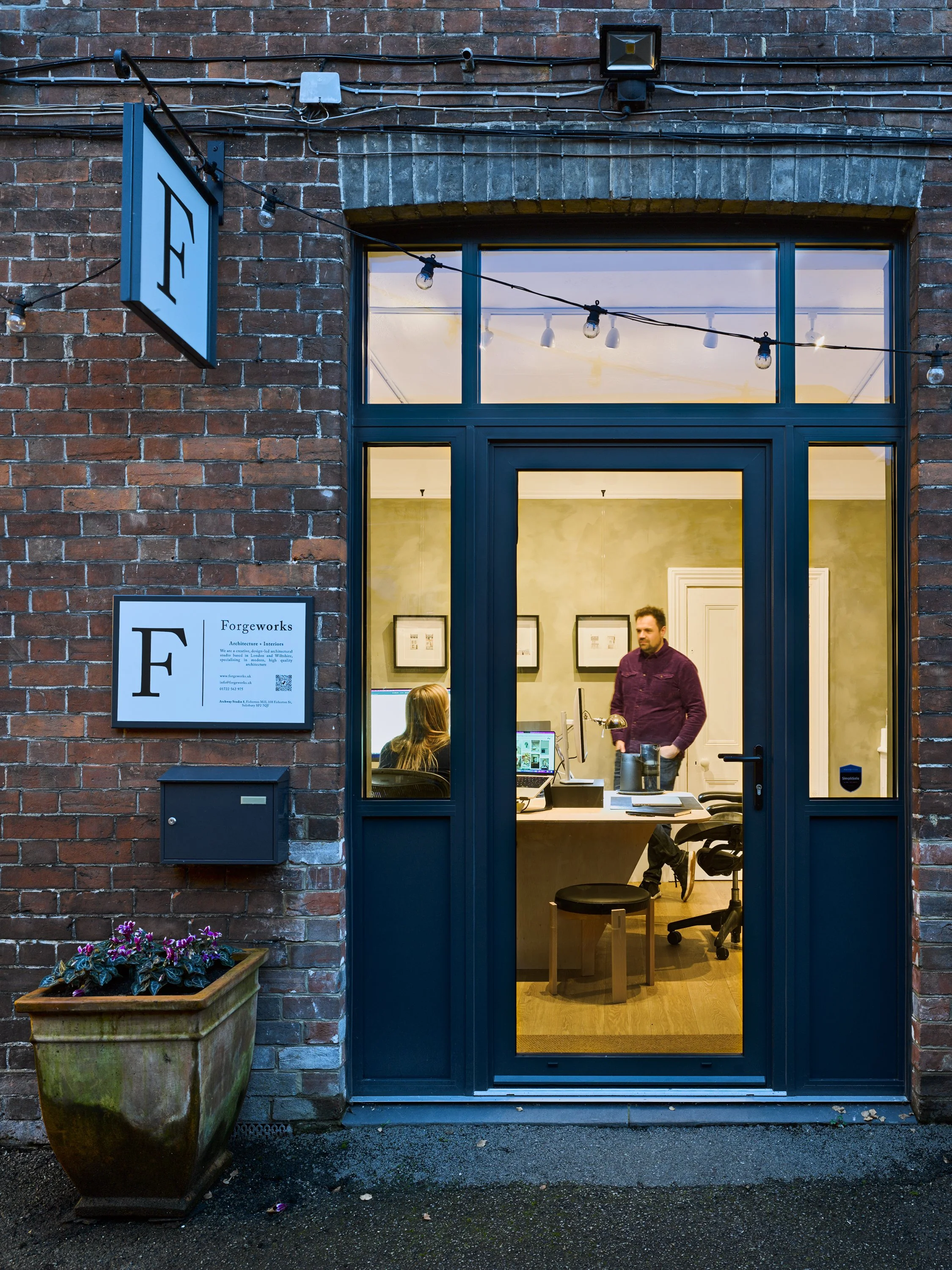
Forgeworks Architects is a RIBA Chartered Practice based at Fisherton Mill, 108 Fisherton Street, Salisbury SP2 7QY. All client projects are led by an RIBA Chartered Architect.