
A house of blue lias
-
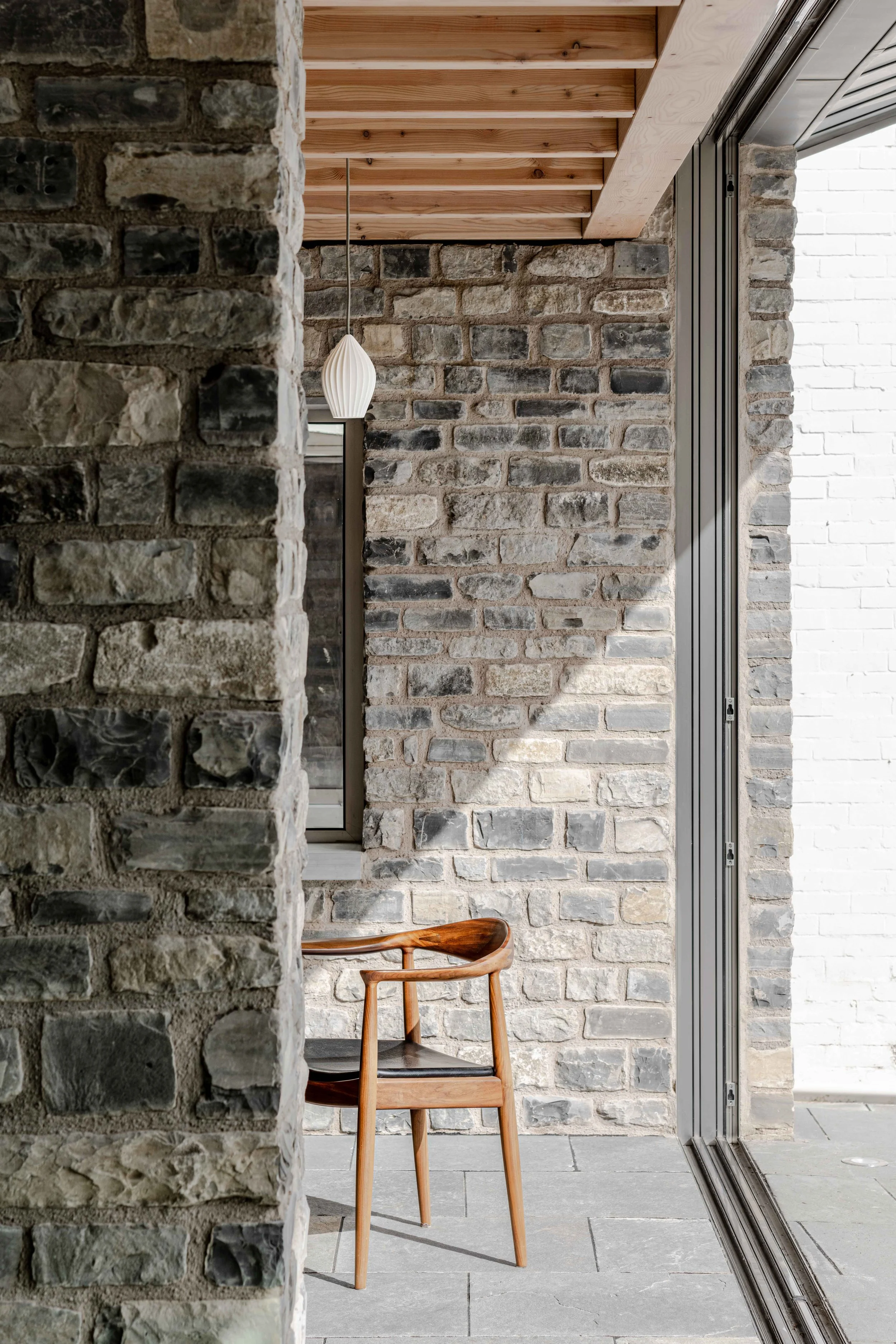
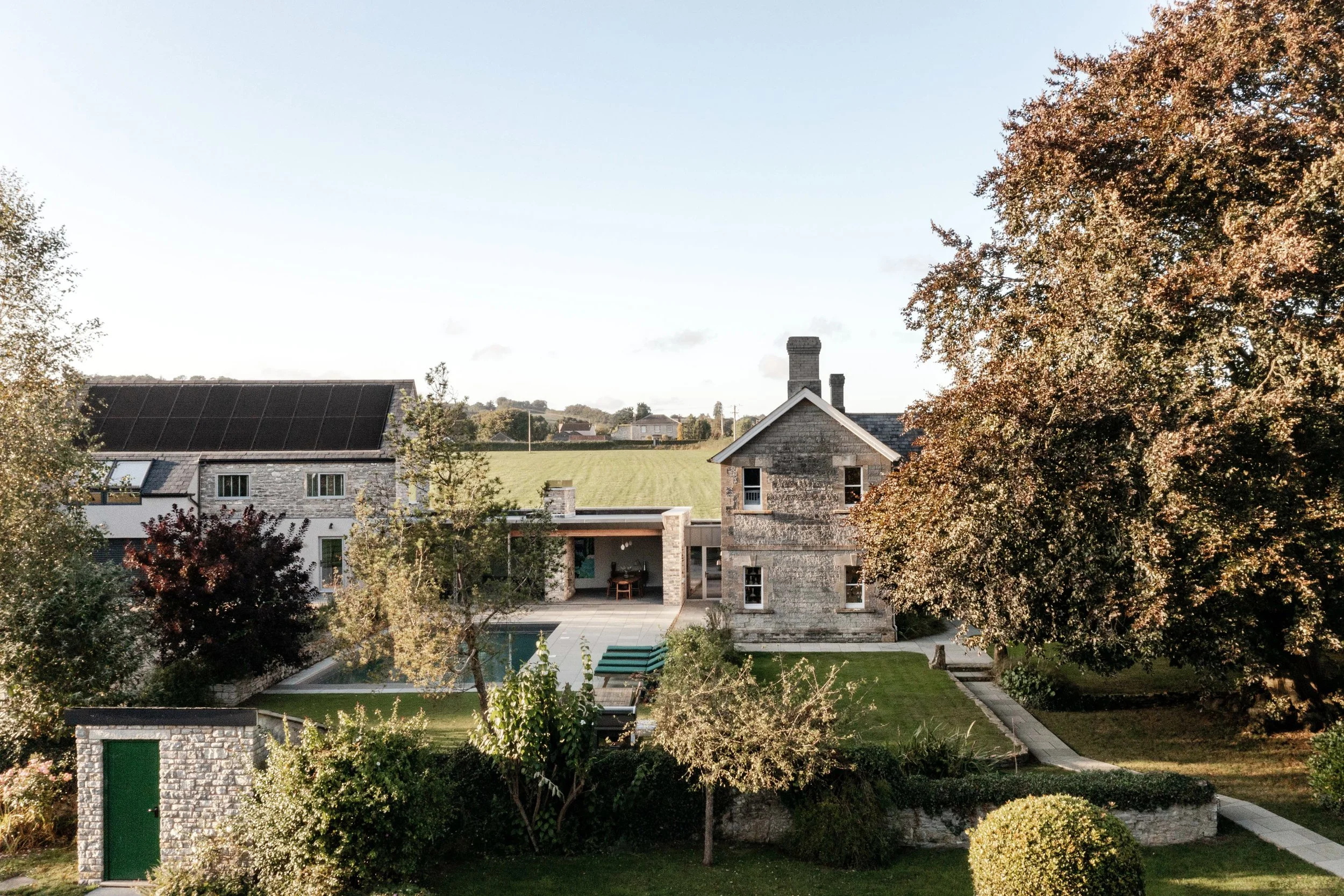
Inspired by the client’s love of mid-century American modernism, the new building features minimal glazing framed in brushed stainless steel and is a showcase for locally quarried blue lias stone.
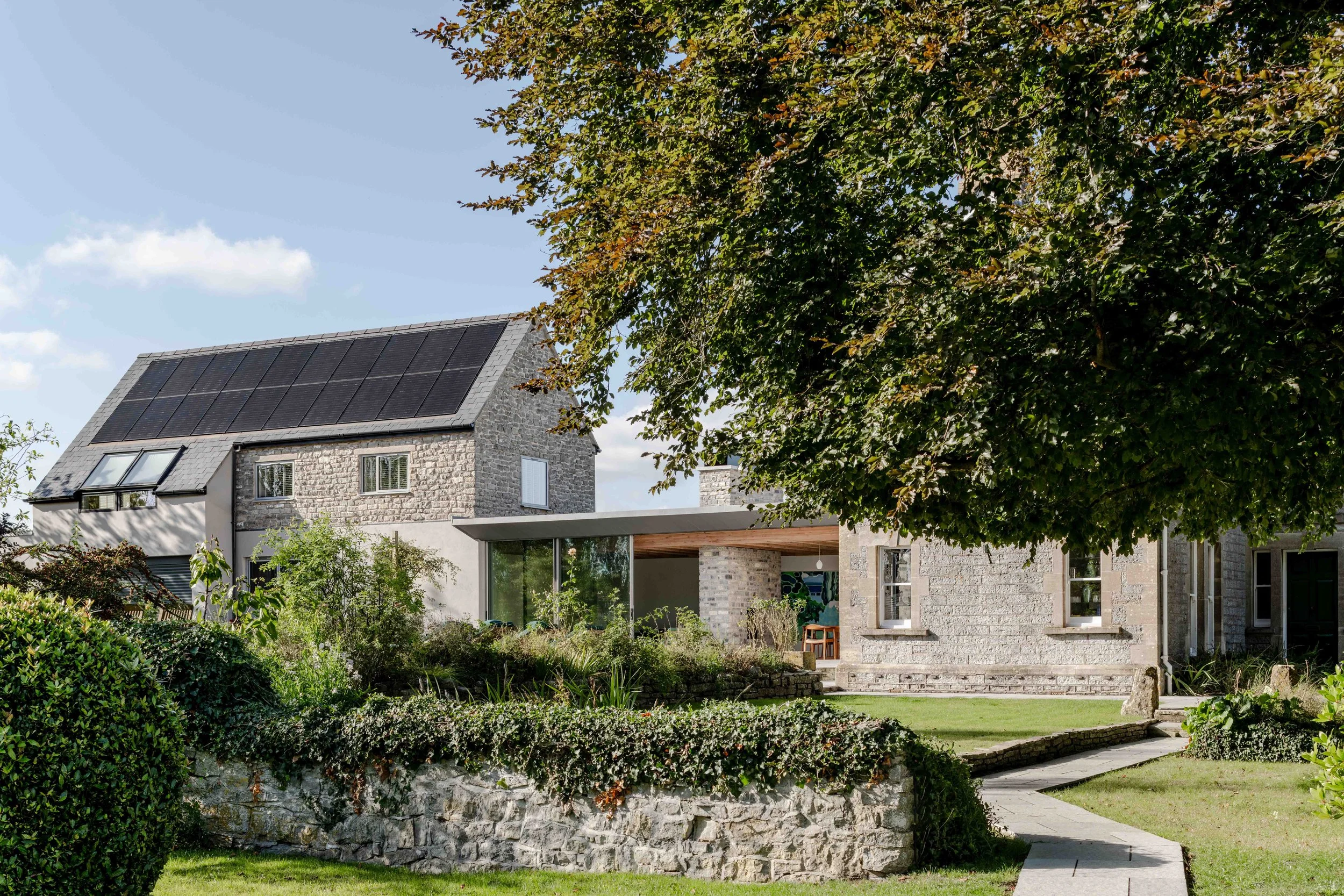
Set on a 3.5 acre site close to Bruton and Castle Cary in Somerset, the property included an 19th century farmhouse and poorly converted barn. The owners, a couple with two teenaged sons, wanted to unify these very different buildings while respecting and cherishing the farmhouse’s period architecture.
The brief included renovating the underused barn which suffered from damp issues throughout and a lack of insulation which made it unbearably hot in summer and freezing in winter.
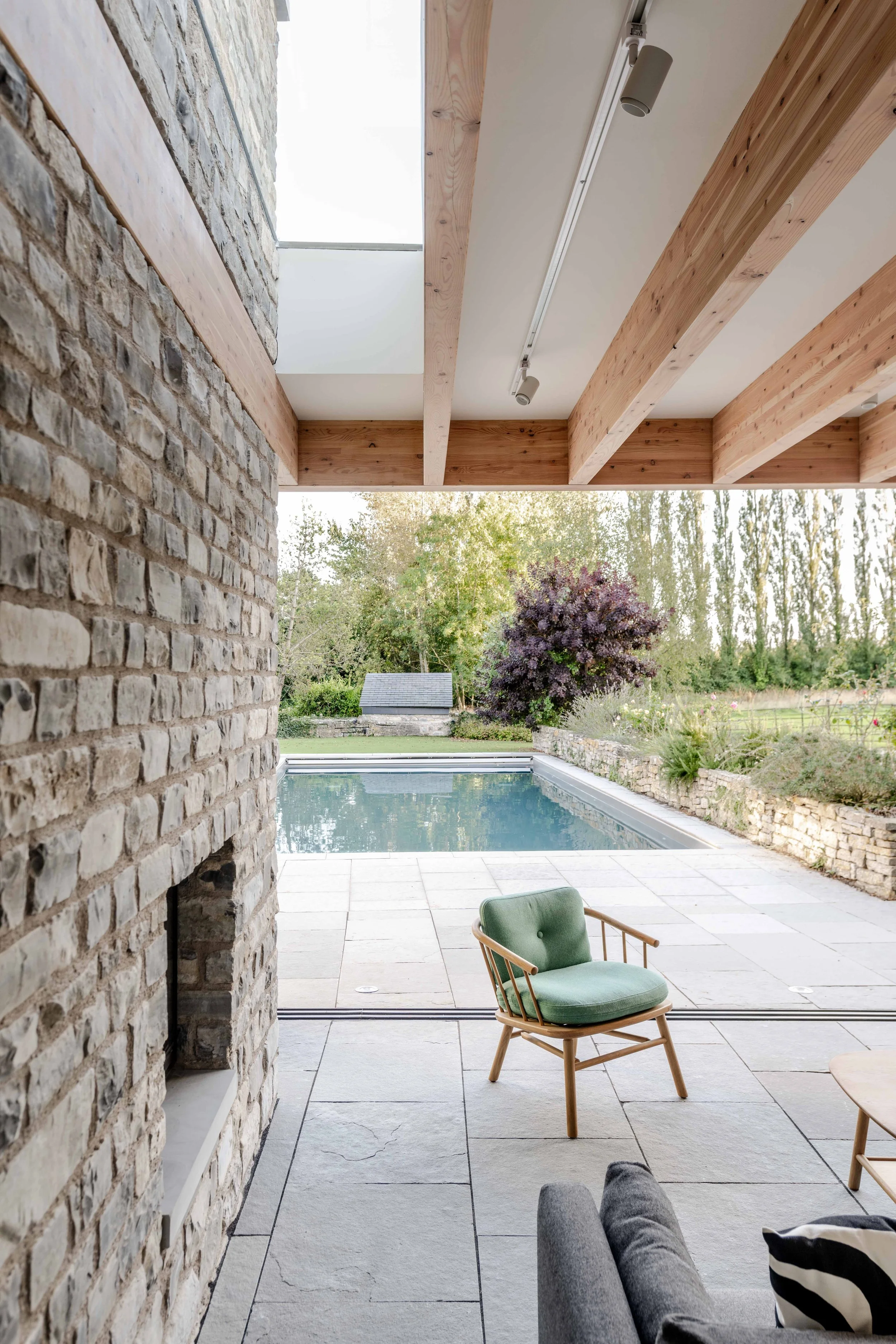
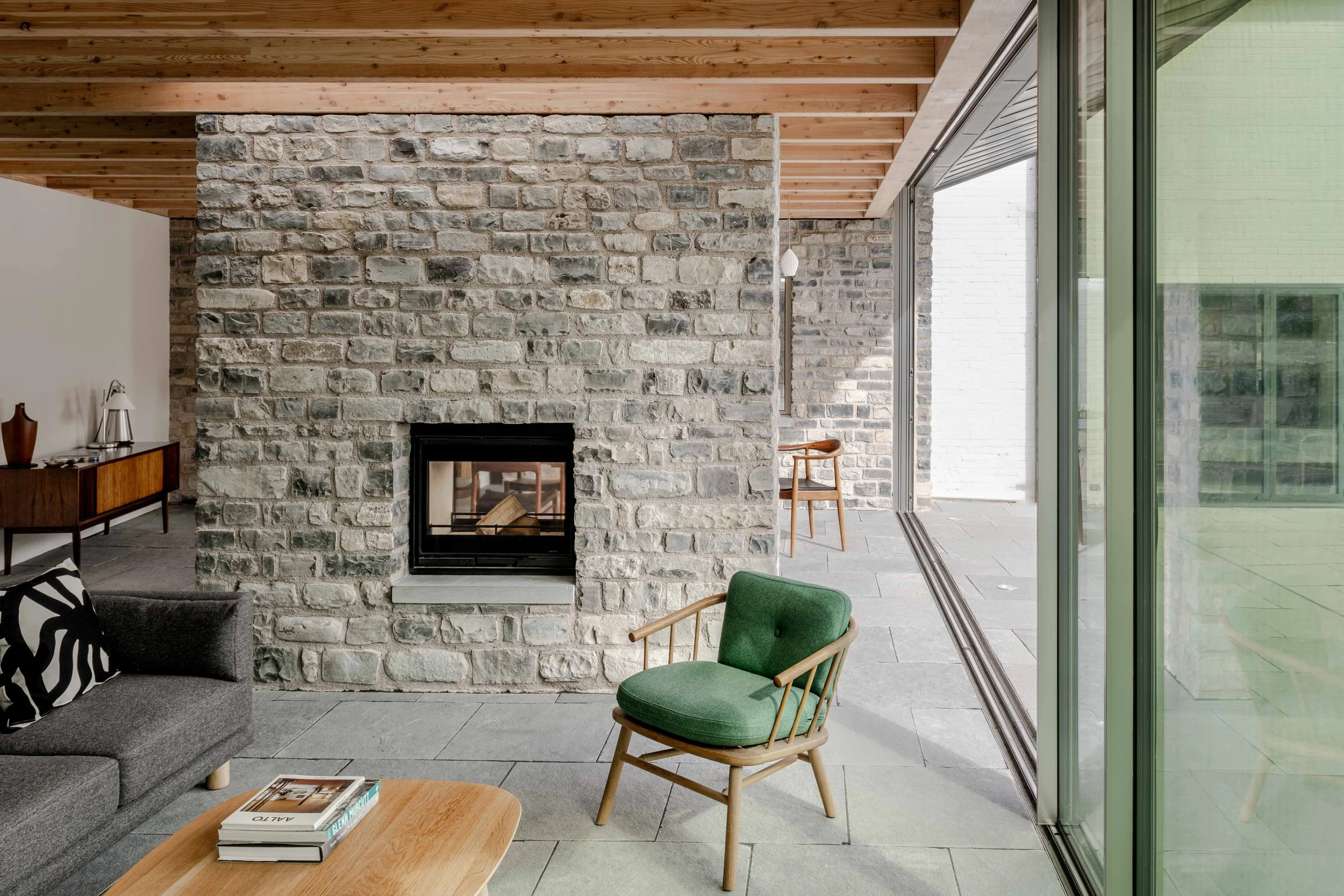
Forgeworks Architects designed the new connecting building, which provides a formal dining and living room, with a minimalist approach - bringing definition and balance between the heavier original structures. The glazing consists of five panels mounted on three recessed tracks, allowing both areas to be fully opened on to the south-facing terrace and swimming pool.
A carefully constructed duel sided solid fuel fireplace forms a centrepiece, dividing the space with a freestanding chimney, also in blue lias stone, which climbs up through the roof above.
The full width and height glazing rises above the internal ceiling allowing the front edge of the timber roof structure to be exposed, reducing the apparent thickness of the roof edge down and communicating the honest and engineered nature of the design.
The barn was gutted internally, preserving only the existing deep stone walls, and retrofitted to incorporate high performance insulation, solar panels, batteries and air source heat pumps.
Its interior spaces have been rearranged to house bedrooms, bathrooms, a playroom, study, and garage space for the owner’s vintage cars.
The exterior has been designed to give a contemporary but contextual feel with off white render and raked back existing stone work.





-
August 2025, Archello
August 2025, Aspire Design & Home
August 2025, Cotswold Living
August 2025, Wiltshire Living
A house of blue lias
Photographs by French + Tye